Nosferatu (1922)
“He casts no reflection — but his shadow falls on us all.”
Streamed free from the Internet Archive · no signup, no cost — this film is in the public domain.
Synopsis
In 1838, the estate agent Thomas Hutter is sent to a remote Carpathian castle to close a property sale with the reclusive Count Orlok — not knowing his host is a vampire. Fixated on a portrait of Hutter's wife Ellen, Orlok ships himself in coffins to the German town of Wisborg, trailing plague and rats in his wake. With the town dying, Ellen learns that only a pure-hearted woman who freely gives her blood can destroy the creature, and resolves to hold him past the break of dawn. It remains a haunting meditation on dread, contagion and sacrifice.
Cast
About the Director
F. W. Murnau — F. W. Murnau (1888–1931) was a master of German Expressionist cinema, celebrated for a roving, subjective camera that put the audience inside a character's mind. Beyond 'Nosferatu' he made 'The Last Laugh' (1924) and the Oscar-winning 'Sunrise' (1927); he reportedly directed this film from meticulous sketches, even using a metronome to set the actors' pace. He died in a California car crash in 1931.
Why It’s Free: The Public-Domain Story
Two things often get tangled here. Prana Film never licensed Bram Stoker's "Dracula," so his widow Florence Stoker sued for infringement and won — a court ordered every print destroyed, but enough copies had already scattered worldwide to survive. That order, however, is not why the film is free today: 'Nosferatu' is in the public domain simply because of its age, as a 1922 work whose copyright term has long since expired.
Behind the Scenes
The film was the only production of Prana Film, a short-lived studio co-founded by the occultist artist Albin Grau, which went bankrupt soon after release. Exteriors were shot across northern Germany — in Wismar and Lübeck — with the "Transylvania" scenes filmed on location in northern Slovakia, including Orava Castle. It premiered on March 4, 1922 at a costumed gala in Berlin billed as "Das Fest des Nosferatu."
Did You Know?
- To dodge the Stoker estate the names were changed — Dracula became Orlok, Harker became Hutter, Mina became Ellen — though the credits still openly named "Dracula" as the source.
- It was the first film to have a vampire destroyed by sunlight; earlier vampire lore, the novel included, treated daylight as a nuisance rather than a death sentence.
- Conrad Veidt was offered the role of Orlok but turned it down, opening the door for the then-unknown Max Schreck.
- An unauthorized 1930 sound recut, "Die zwölfte Stunde," renamed the characters yet again, added footage Murnau never shot, and dropped his name entirely.
Reception & Legacy
Reviews in 1922 were largely warm, praising Murnau's eerie atmosphere and nature photography. It is now considered one of the towering masterpieces of the silent era and a foundation of the horror genre — Schreck's rat-like Orlok and his shadow climbing the staircase rank among the most iconic images in all of film.
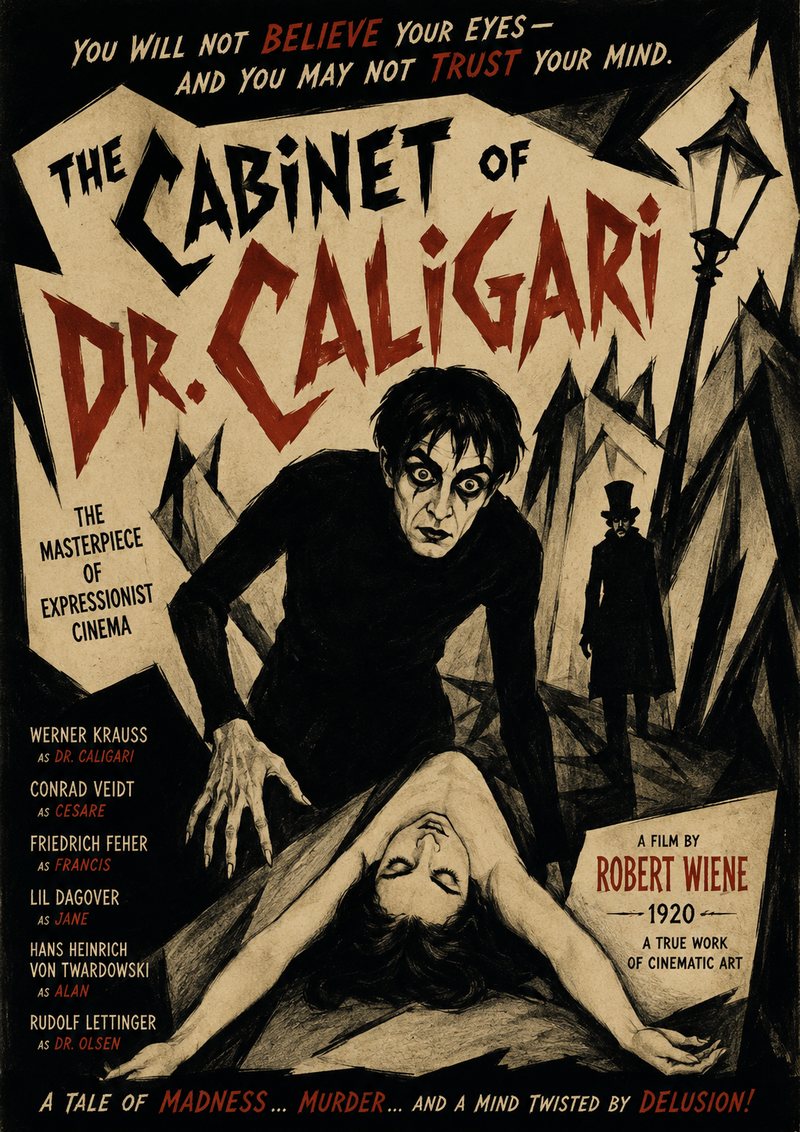 The Cabinet of Dr. Caligari
 Beast from Haunted Cave
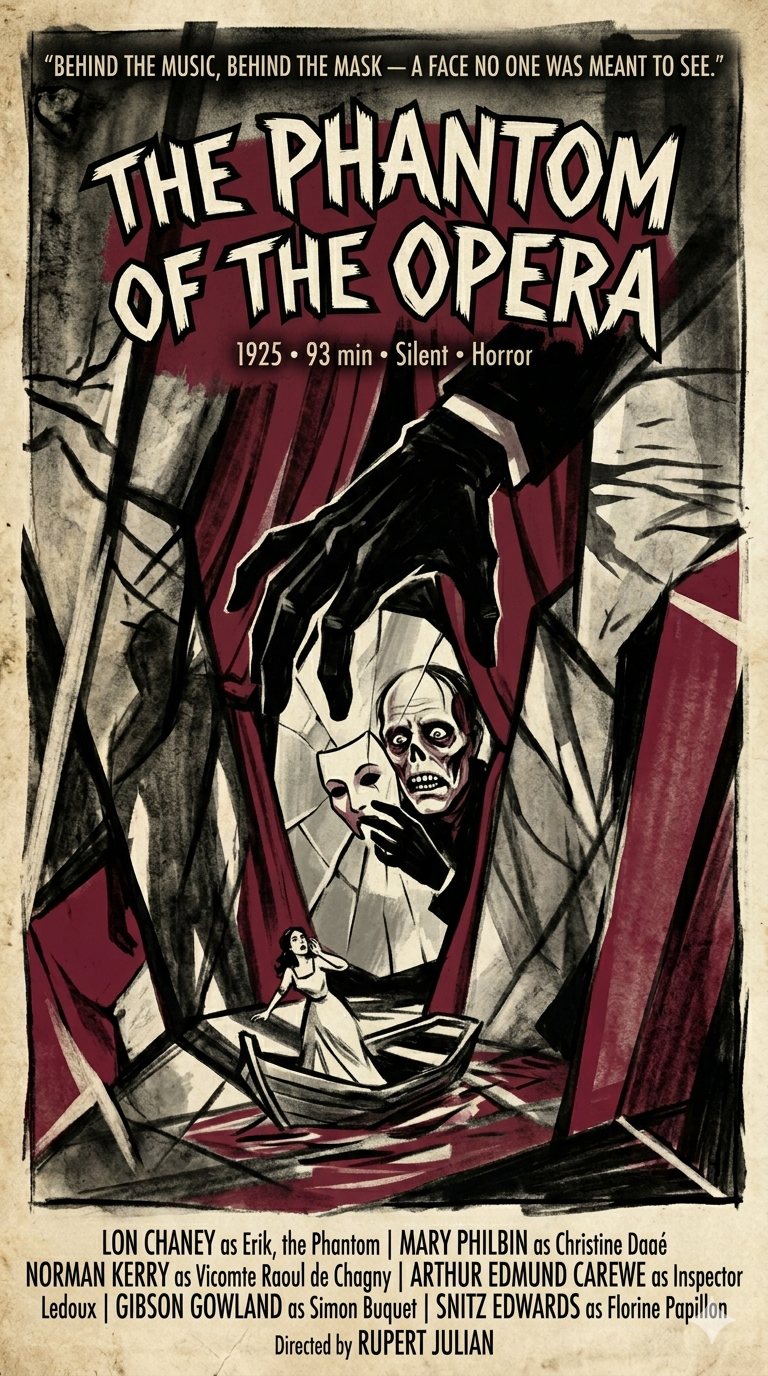 The Phantom of the Opera
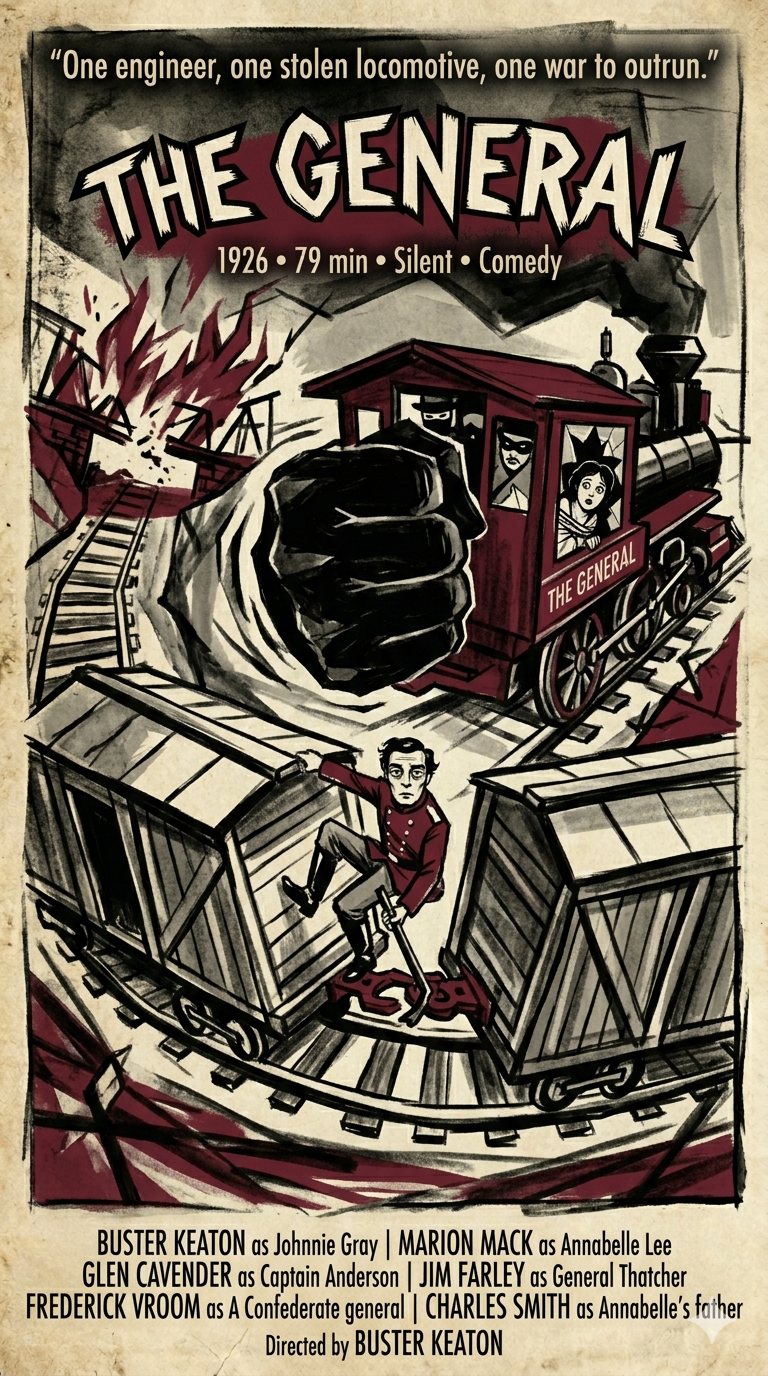 The General