Angel and the Badman (1947)
“A gunman's fastest draw met its match in a Quaker girl's faith.”
Streamed free from the Internet Archive · no signup, no cost — this film is in the public domain.
Synopsis
Notorious gunfighter Quirt Evans, wounded and near collapse, is taken in and nursed back to health by Quaker farmer Thomas Worth and his daughter Penelope. As Penny's gentle conviction in nonviolence works on him, Quirt is torn between her world and his old life of gunplay, rustling, and a simmering grudge against the killer Laredo Stevens. The patient Marshal Wistful McClintock circles, waiting to see which path Quirt will choose — until violence finally forces a reckoning and Quirt must decide whether to strap on his gun one last time.
Cast
About the Director
James Edward Grant — James Edward Grant was a screenwriter who became one of John Wayne's most frequent and trusted collaborators, scripting many of his films over the following two decades. 'Angel and the Badman' was notable as Grant's directorial outing — he served as both writer and director — and its character-driven, leisurely approach reflected his writerly sensibility over conventional action.
Why It’s Free: The Public-Domain Story
'Angel and the Badman' is in the public domain because its copyright was never renewed. Under the 1909 Copyright Act the film needed a renewal in its 28th year, and when rights-holder National Telefilm Associates failed to file, the copyright lapsed in 1975 — and it has been freely available ever since.
Behind the Scenes
This was the first film John Wayne produced as well as starred in, made through his John Wayne Productions and released by Republic Pictures. Principal photography ran from mid-April through late June 1946 in Flagstaff and Sedona, Arizona, and Monument Valley. The picture premiered in February 1947 as a deliberate departure from the standard action-heavy Western of its day.
Did You Know?
- It was Wayne's very first outing as a producer, an early bid for creative control over his career.
- Stunt legend Yakima Canutt served as second-unit director.
- In 1993, Johnny Cash wrote and recorded a song inspired by the film, titled "Angel and the Badman."
- Its "man of violence finds peace in a religious community" premise is often cited as an influence on later films like 'Witness' (1985).
Reception & Legacy
Contemporary reviewers praised it as a cut above the usual Western — The New York Times called it "a notch or two superior to the normal sagebrush saga," with Wayne grim and convincing and Gail Russell winning as the woman who makes him "see the light." The film endures as a beloved, frequently revisited Wayne title and is widely watched today thanks to its public-domain status.
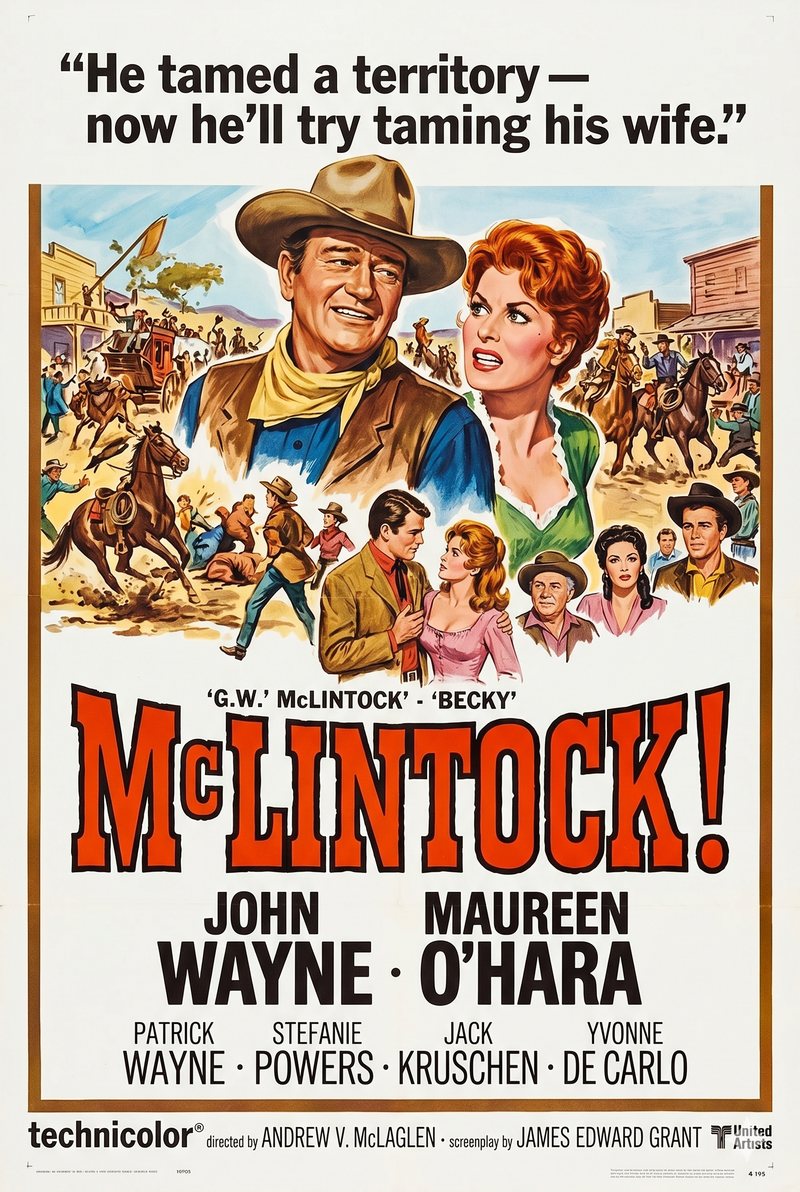 McLintock!
 Santa Fe Trail
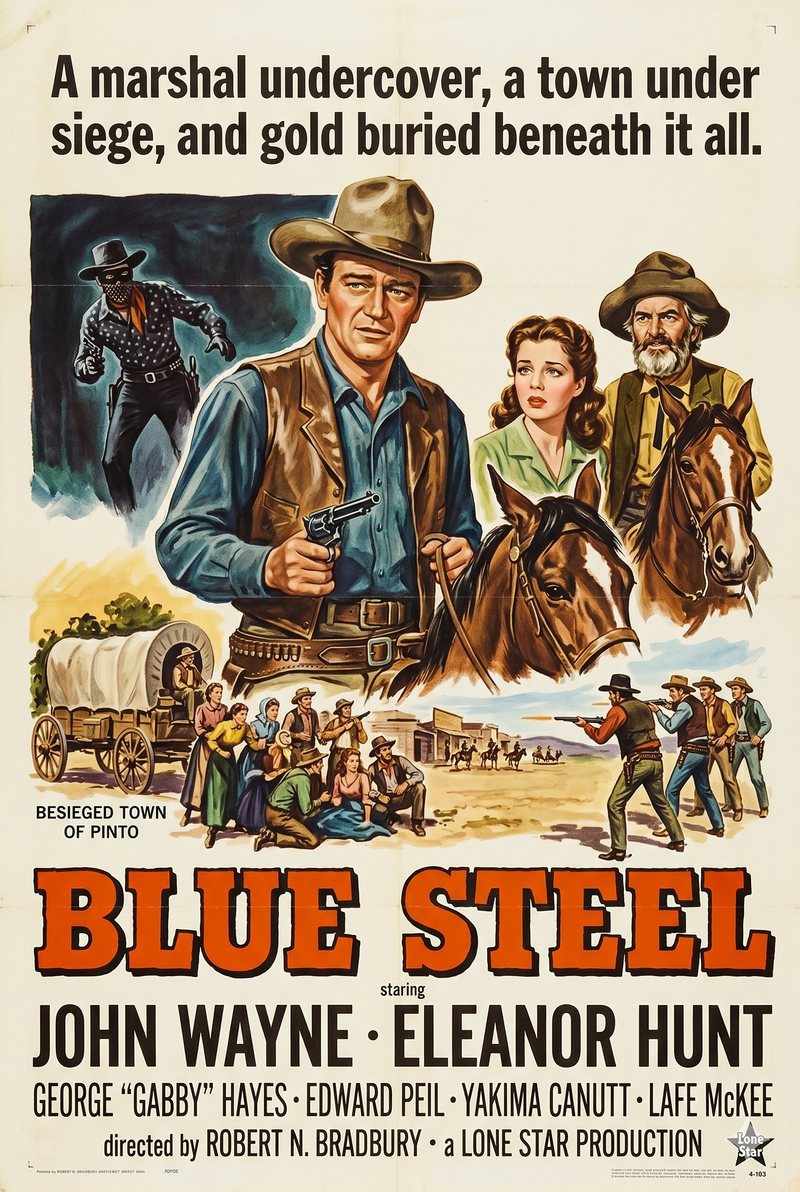 Blue Steel
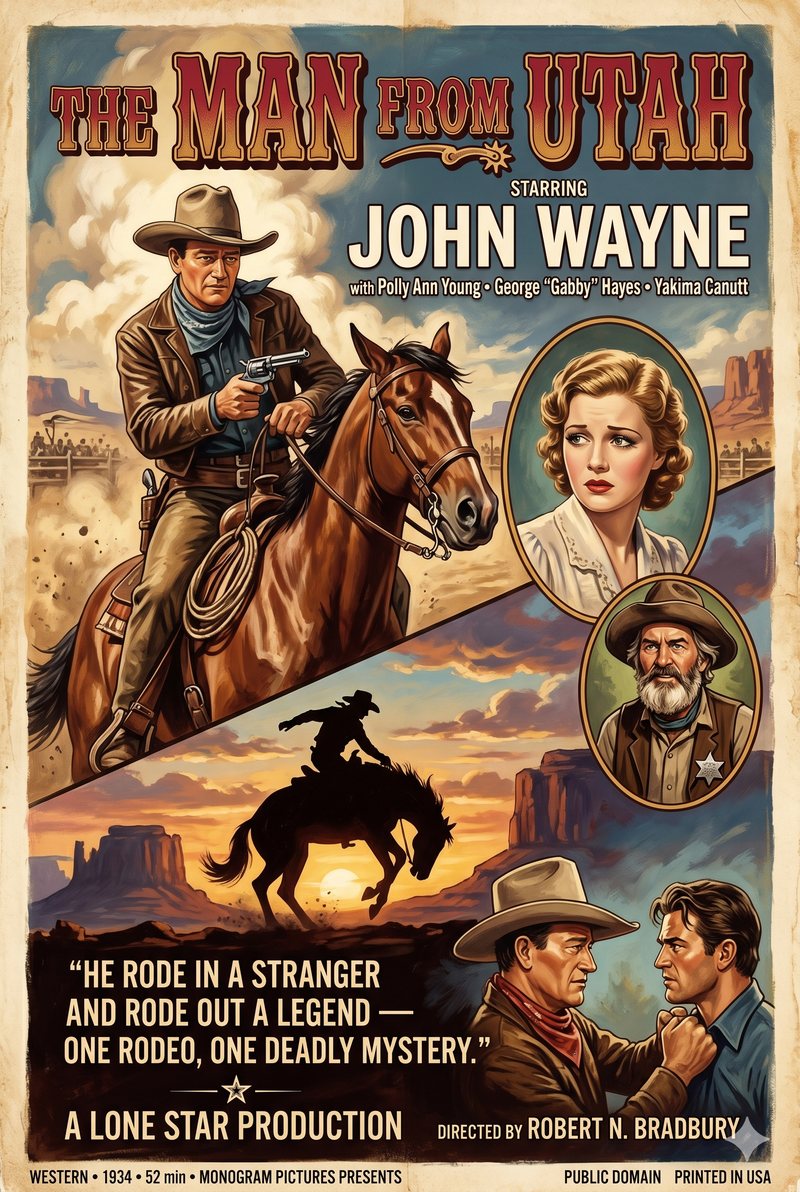 The Man from Utah